



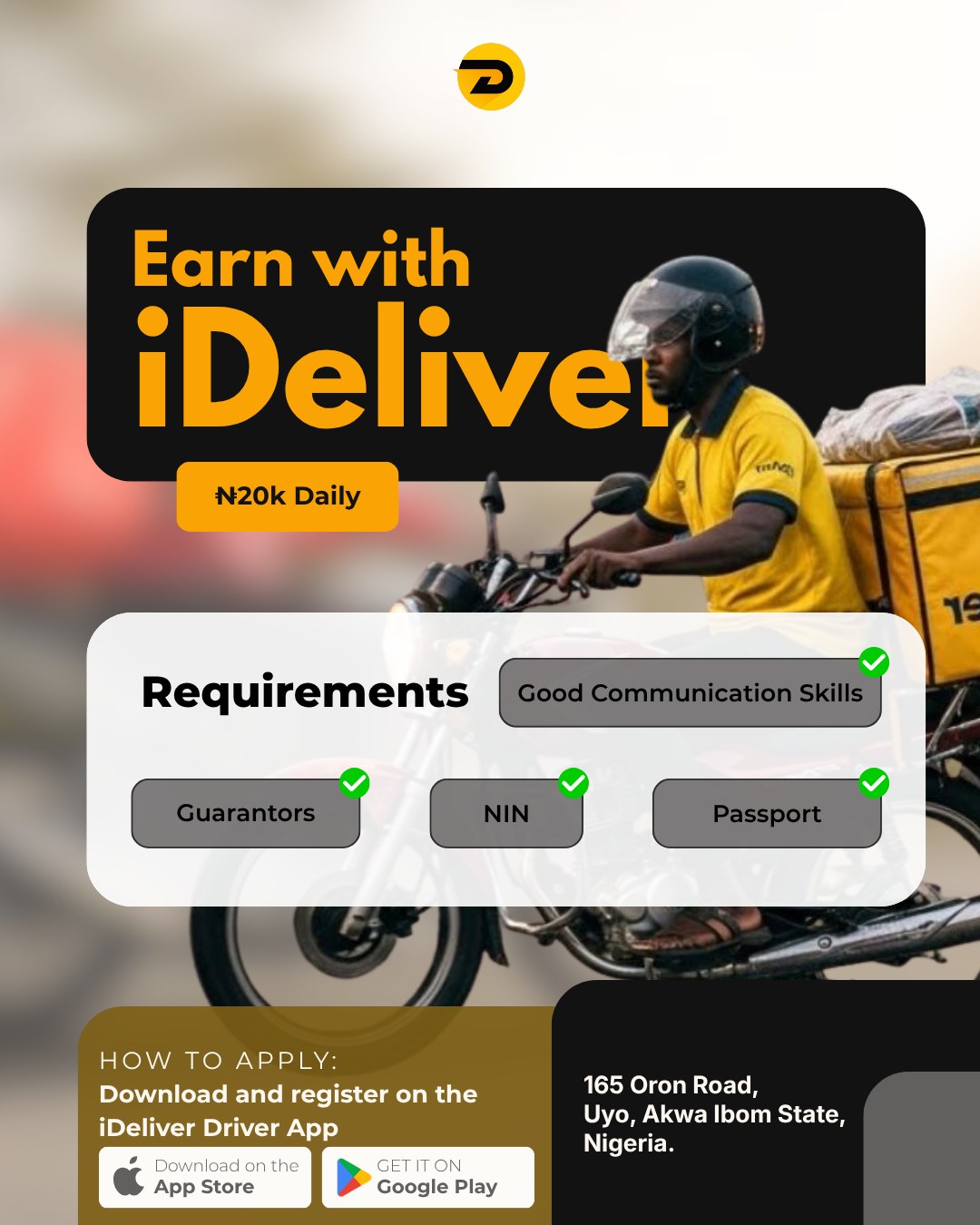






Before the app badge loads, someone already decided to take the order. A vendor flipped the kitchen from idle to fire. A rider checked fuel and rain. That’s the iDeliver experience — not a slide deck, a Tuesday on the road.
Here’s a look behind the hustle for the people who keep Uyo fed and moving.
Riders: the map is only half the job
The Driver App can show full-bleed maps, turn-by-turn, and stacked multi-stop trips. Offers arrive as high-priority pushes with accept/decline and timers. Dynamic Island and floating bubbles help when you’re helmet-on. Still, the hard parts are human: estate gates, “second left after the church,” and customers who change the pin mid-ride.
Rider Rewards — streaks, peak missions, clearer earnings — exist because consistency should pay. Cash-in-hand tracking matters on COD days when money and meals travel together.
Vendors: the board never sleeps
Pull-to-refresh order boards and in-app chat alerts are how kitchens survive lunch. Smart Meals tagging and busy/available toggles stop you taking tickets you can’t plate. Mark ready. Seal the bag. Hand off clean. Slow accepts are what make customers stare at the map and assume the worst.
Trust is a two-way street
Customers see rider names and photos on newer builds. Riders see clearer offers. Vendors see whether cash is settled before payouts release on COD holds. Experience improves when nobody is guessing who is holding the money or the jollof.
Rain, traffic, generators
Uyo weather and power moods rewrite the afternoon. Good experience isn’t pretending those don’t exist — it’s notifications that still fire, retries when the network blinks, and handoffs that don’t leave people arguing in the rain.
Why this beat matters
Apps can look polished and still fail the street test. iDeliver’s edge is the loop between customer, vendor, and rider on one network — same city problems, fewer abandoned chats.
Ride, sell, or order with iDeliver: ideliver.ng/download/app



What do you think?
It is nice to know your opinion. Leave a comment.